
Vintage Soviet Christmas ornaments are often discussed as if they were the products of a single industry with a common style. In reality, their history is much more complicated.
Across the Soviet Union, Christmas and New Year decorations were produced by specialized factories, small artels, local industrial combines, glassworks, and workshops attached to enterprises whose main products had little to do with Christmas decorations.
Soviet Ukraine was an important part of this industry. Glass ornaments, cotton figures, papier-mâché decorations, cardboard ornaments, beads, garlands, foil decorations and later synthetic ornaments were produced in different parts of the Ukrainian SSR.
Some Ukrainian factories became large specialized manufacturers. Others began as small workshops or artels and gradually developed into industrial enterprises. In several cities, Christmas ornament production existed alongside completely different glass, mirror, ceramic or consumer-goods manufacturing.
This article explores some of the most important centers of Christmas ornament production in Soviet Ukraine and the different ways in which this industry developed.
From Christmas Tradition to Soviet New Year
The history of Soviet Christmas ornaments cannot be separated from the unusual history of the Christmas tree itself.
During the early Soviet period, the traditional Christmas tree was increasingly discouraged and eventually disappeared from official public celebrations. The situation changed dramatically at the end of 1935, when the tree returned — not primarily as a religious Christmas symbol, but as a secular New Year tree for children.
Demand for decorations increased almost immediately.
Industrial production was still limited, so many early Soviet decorations were made from inexpensive and readily available materials. Paper, cardboard, foil, papier-mâché and pressed cotton were widely used. Glass ornaments existed as well, but during the 1930s they were generally more expensive and were produced in smaller quantities than they would be in later decades.
Pressed-cotton figures became especially characteristic of the period. Wire or other supports formed the basic structure, cotton created the body, and the finished figure was shaped, painted and coated.
By the late 1930s, the New Year tree had also become a place where Soviet imagery appeared alongside traditional winter and fairy-tale subjects. Polar explorers, aircraft, pioneers and other contemporary themes joined animals, children and familiar decorative forms.
After the Second World War, production expanded considerably.
Ukraine became home to a diverse network of factories and workshops producing decorations for the growing Soviet consumer market.
Different Factories, Different Origins
One of the most interesting aspects of Ukrainian Soviet ornament production is that there was no single model for creating a factory.
Some enterprises began as artels — small cooperative manufacturing organizations.
Others grew from workshops belonging to local industrial combines.
Some were established specifically for Christmas ornaments.
And some ornament workshops were incorporated into much larger glass or consumer-goods enterprises.
This helps explain why identifying the manufacturer of an unmarked Soviet ornament can be so difficult today. Similar production technologies could be used in several cities, while factories themselves were reorganized, renamed or merged with other enterprises.
Kostiantynivka — Christmas Ornaments Inside a Larger Glass Industry
Kostiantynivka in the Donetsk region was one of Ukraine’s major glassmaking centers.
Its industrial glass tradition reached back to the late nineteenth century, long before Soviet Christmas ornament production developed there.
Christmas ornament production was organized in a specialized workshop in 1953.
This is particularly interesting because the ornament workshop was not an isolated factory. In 1960, the Christmas ornament operation was combined with mirror and majolica production to create the Kostiantynivka Glass and Majolica Products Plant.
The factory therefore represents an important feature of Soviet ornament history: Christmas decorations could be only one part of a much broader industrial enterprise.
Glass tubes were heated over burners and shaped using both free-blowing and mold-blowing techniques.
The documented assortment included approximately thirty types of Christmas ornaments, among them:
- glass balls;
- icicles;
- spinning-top shapes;
- stars;
- fairy-tale characters;
- themed sets such as Fairy Tale and Cipollino;
- large ornaments intended for public Christmas and New Year trees.
The production was not limited to blown glass.
Beginning in the late 1960s, workers also assembled glass-bead decorations and produced cardboard ornaments, foil decorations, garlands, serpentine and confetti. Some of this work was initially performed by home workers and was later transferred to the plant itself.
Kostiantynivka therefore provides an excellent example of how diverse Soviet New Year production could exist within a single industrial enterprise.
Examples from Our Collection
These ornaments from our collection show forms and designs comparable to documented examples associated with this factory. Unless original packaging, labels or other provenance survives, attribution of an individual ornament should be treated with caution.

Antique Vintage Glass Christmas Tree Ornament USSR Old Red Hood
View ornament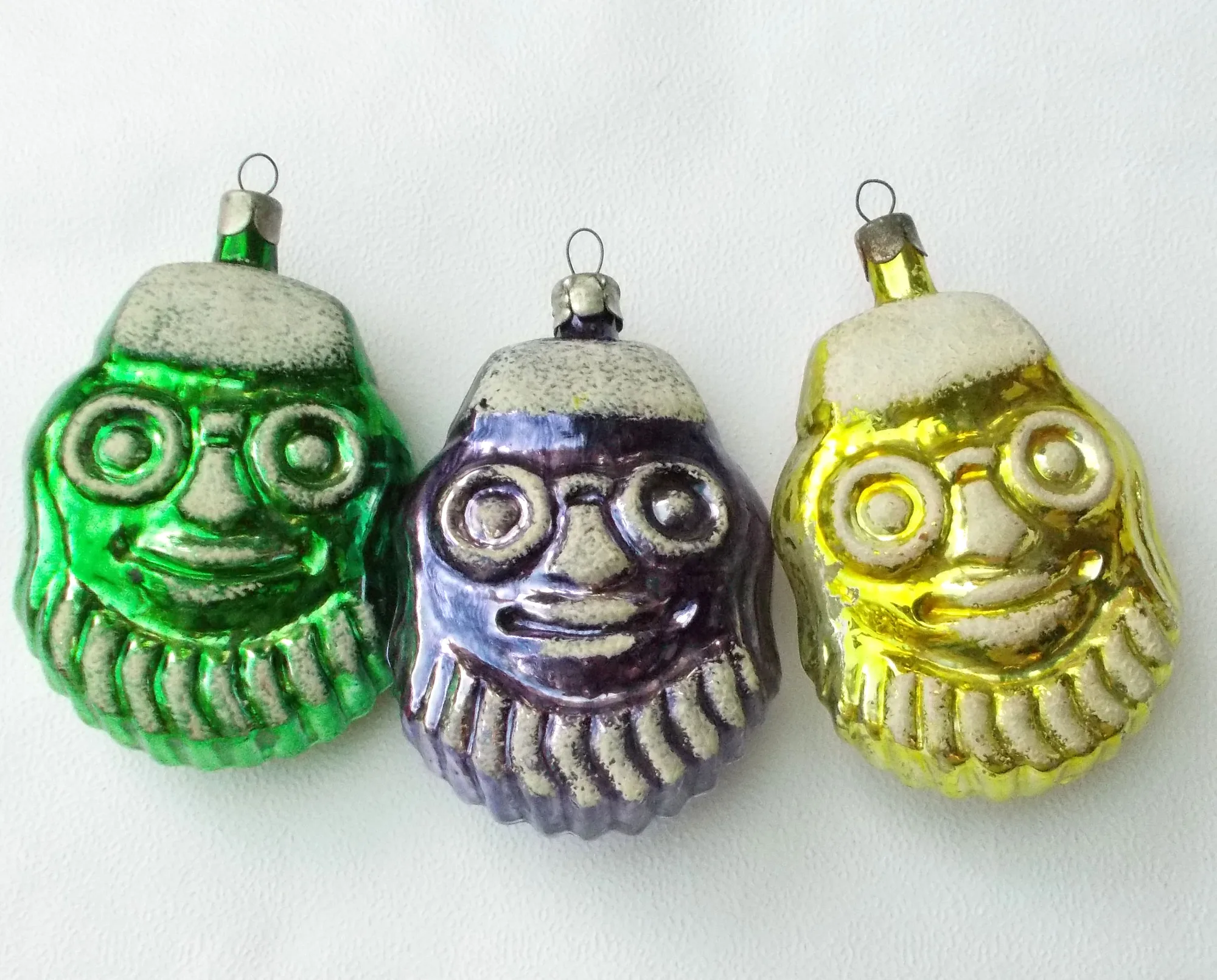
Set of 3 Antique Vintage Glass Christmas Ornaments Santa Face
View ornament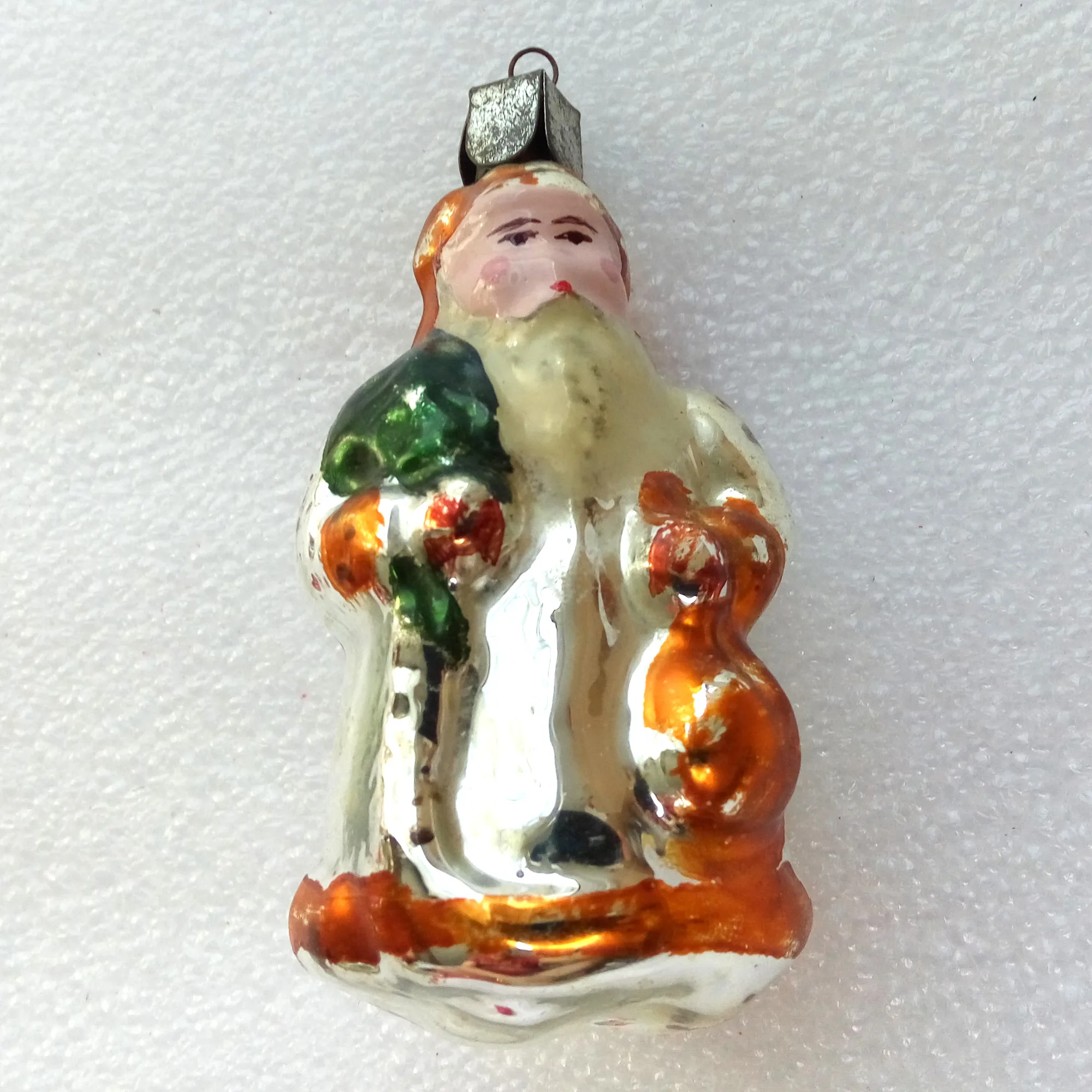
Vintage Glass Christmas Ornament Tree Santa Claus
View ornament
Set of 11 Antique Vintage Silver Glass Christmas Tree Ornaments Decor Pinecones
View ornament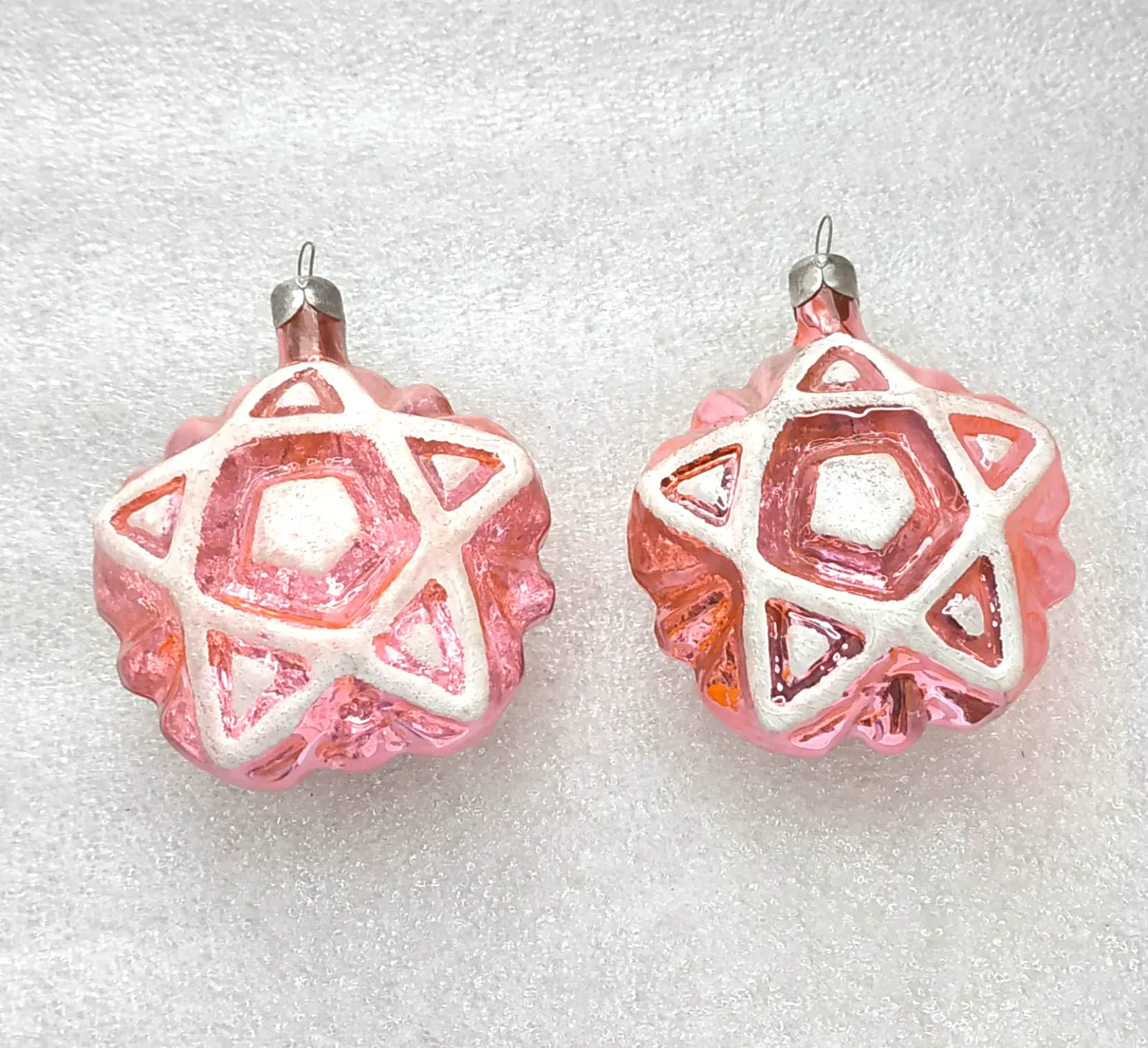
Set of 2 Antique Vintage Silver Glass Christmas Tree USSR Ornaments Decor Stars
View ornamentLysychansk — From a Small Artel to a Christmas Ornament Factory
Lysychansk in the Luhansk region followed a different path.
Christmas ornament production there began around 1950 with the small artel “Chervonyi Zhovten” (“Red October”).
This artel-based beginning is important because cooperative workshops played a major role in Soviet consumer-goods production before many of them were reorganized into larger state enterprises.
Over time, the Lysychansk operation developed into a factory associated specifically with Christmas ornaments.
Glass became an important part of its production, including balls and numerous figurative decorations.
Lysychansk ornaments are especially interesting to collectors today because the factory existed within one of eastern Ukraine’s major glassmaking regions. The city itself had a long industrial connection with glass production, providing a natural environment for the development of skilled glassblowing and related manufacturing.
The history of Lysychansk also illustrates a wider transformation that occurred throughout the USSR: small artel production gradually gave way to increasingly centralized and industrialized factory production.
Examples from Our Collection
These ornaments from our collection show forms and designs comparable to documented examples associated with this factory. Unless original packaging, labels or other provenance survives, attribution of an individual ornament should be treated with caution.
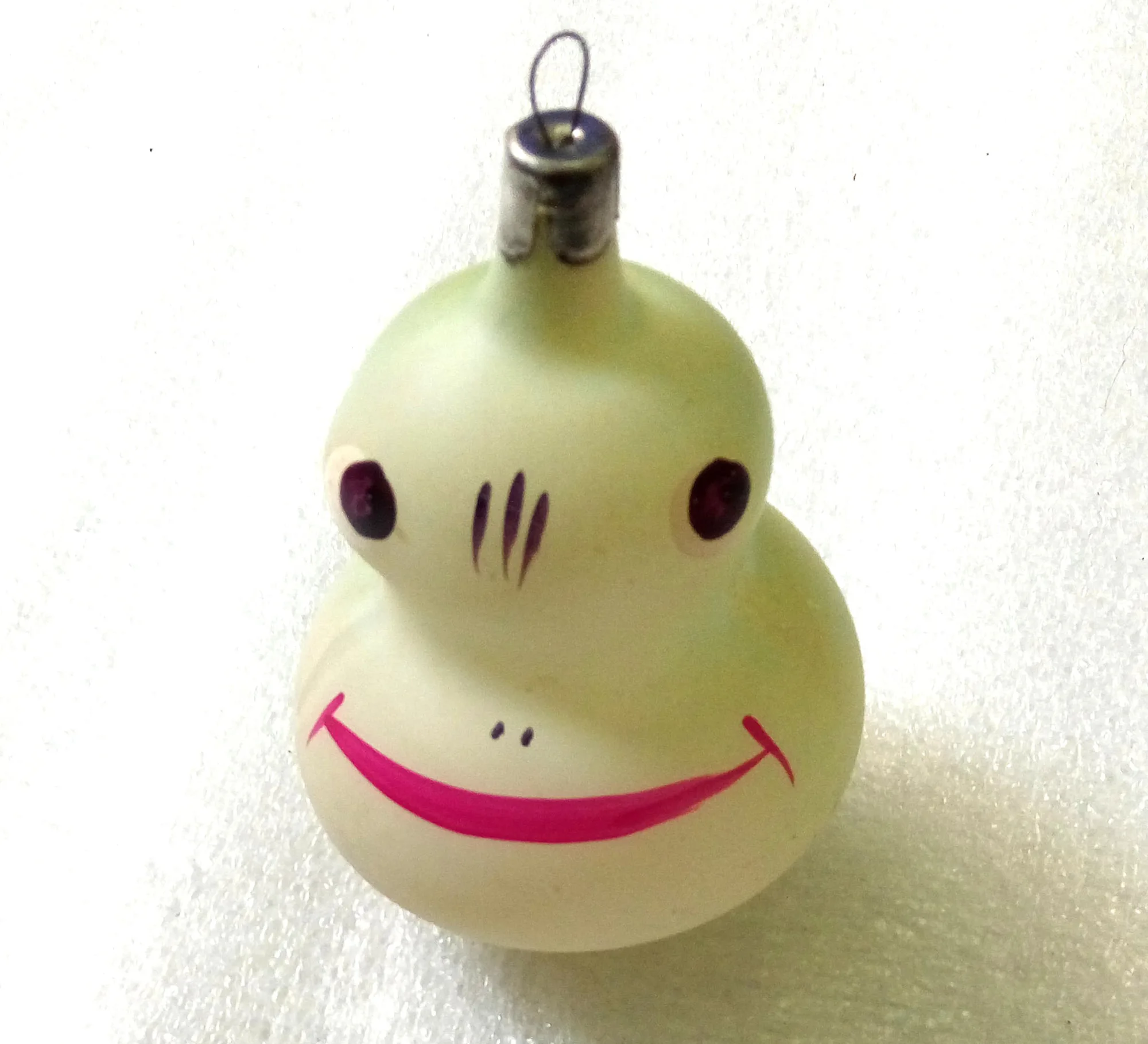
Vintage Glass USSR Christmas Ornament Frog
View ornament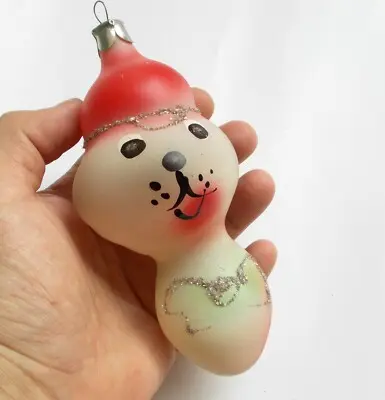
BIG Vintage USSR Glass Christmas Tree Ornament Dog
View ornament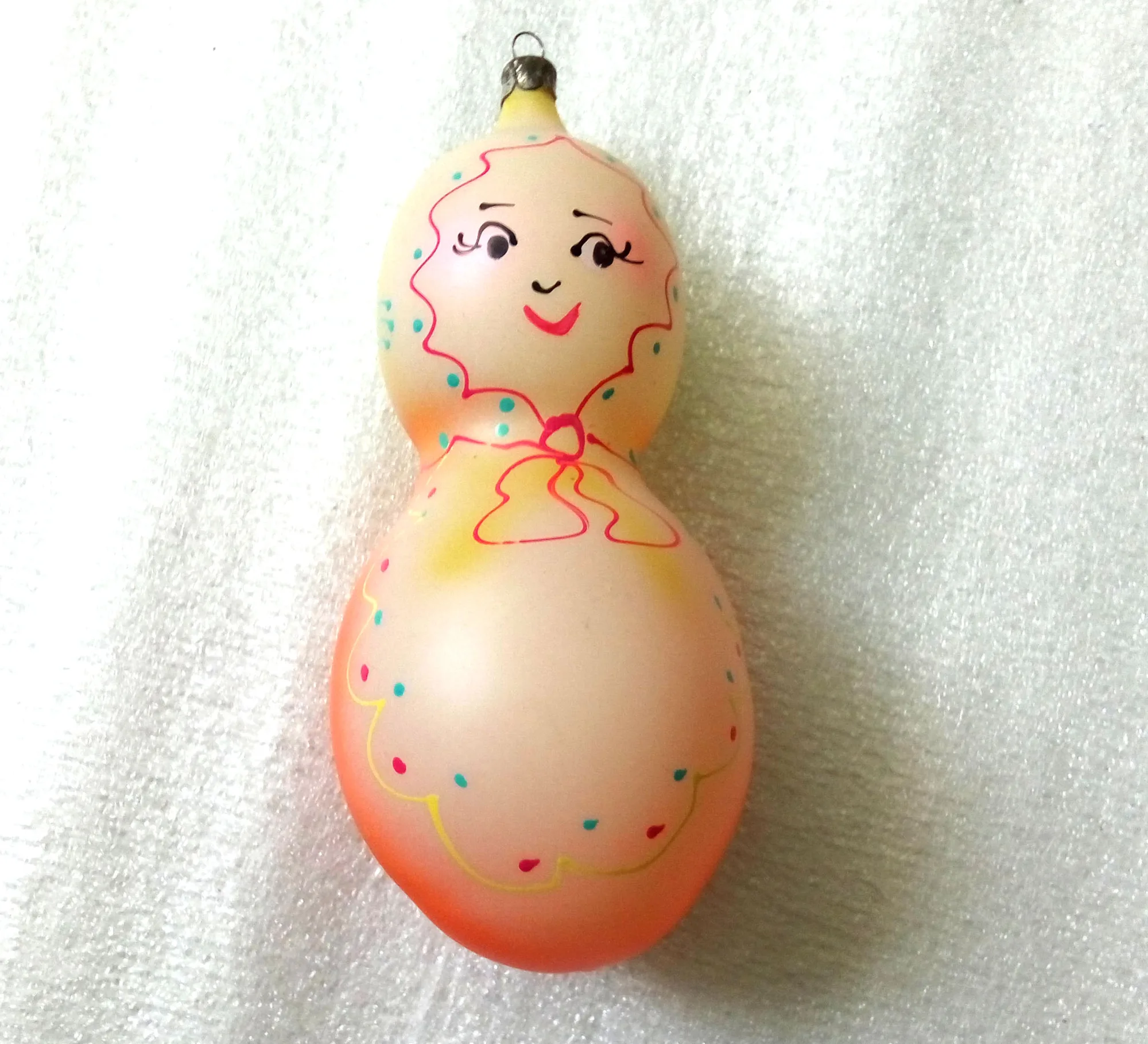
Big Vintage Glass USSR Christmas Ornament Doll
View ornament
Set of 5 Vintage Glass Christmas Ornaments Balls
View ornament
Antique Vintage Glass USSR Christmas Ornament Old Mushroom
View ornamentKupiansk Foundry Plant (KLZ) — Soviet-Era Christmas Ornament Production
The history of Soviet Ukrainian Christmas ornament manufacturing also includes the Kupiansk Foundry Plant (KLZ), located in the Kharkiv region of eastern Ukraine. During the Soviet period, the plant had a workshop dedicated to the production of Christmas tree ornaments, contributing to the region’s tradition of glass Christmas decorations.
According to accounts of the local ornament-making industry, workers from the Kupiansk plant were sent to the Lysychansk Christmas Ornament Factory to learn specialized production techniques. This connection illustrates how manufacturing knowledge and practical skills were shared between enterprises producing Christmas decorations across Soviet Ukraine.
Glass Ornament Production and Skilled Craftsmanship
The production of glass Christmas ornaments required specialized skills, including glass shaping, finishing and decorative work. Experienced workers played an essential role in producing delicate ornaments and maintaining consistent quality.
The ornament workshop at the Kupiansk Foundry Plant formed part of this broader industrial tradition. Its connection with the Lysychansk factory highlights the importance of cooperation and the transfer of manufacturing expertise between regional production centers.
A Place in the History of Ukrainian Christmas Ornaments
Although the Kupiansk workshop is less widely documented than some of Ukraine’s better-known Christmas ornament factories, it represents an important chapter in the history of Soviet-era holiday decoration production.
Its story helps preserve the memory of the workers and manufacturing traditions that contributed to the production of Christmas ornaments in eastern Ukraine. The Kupiansk Foundry Plant deserves recognition alongside other Ukrainian enterprises associated with the country’s historical Christmas ornament industry.
Klavdiievo-Tarasove — From Medical Glass to Christmas Ornaments
The factory at Klavdiievo-Tarasove in the Kyiv region developed in yet another way.
Founded in 1948, the enterprise began as a small operation processing glass for medical purposes.
It subsequently developed into a major producer of glass Christmas ornaments.
This transition is an excellent example of how existing glassworking skills could be redirected toward consumer and decorative production.
The traditional manufacturing process required several distinct stages.
Glassblowers heated glass tubes and manually formed the ornaments. The interiors of glass ornaments could then be silvered to create their characteristic reflective appearance. After this came painting, decorative finishing and hand-applied designs.
Over time, Klavdiievo became one of the best-known Ukrainian names associated with glass Christmas ornaments.
Unlike factories where Christmas ornaments remained only one part of a larger industrial operation, Klavdiievo became strongly identified with New Year decorations themselves.
The factory survived the end of the Soviet Union and continues the tradition of Ukrainian glass Christmas ornament production today.
Terebovlia — From Workshop to Factory
Terebovlia in the Ternopil region became another important western Ukrainian center.
Local historical records mention a Christmas ornament workshop as early as 1939, while the later industrial history is clearer: in 1964, the workshop developed into a dedicated Christmas ornament factory.
This transition from a relatively small local operation to a specialized factory mirrors developments seen elsewhere in Soviet Ukraine.
Terebovlia became known for glass Christmas decorations and later continued its glassblowing tradition beyond the Soviet period.
Its history is particularly valuable because it demonstrates that Ukrainian Christmas ornament production was geographically widespread. It was not concentrated only around Kyiv or the major industrial centers of eastern Ukraine.
Western Ukraine developed its own centers of skilled glass ornament production.
Examples from Our Collection
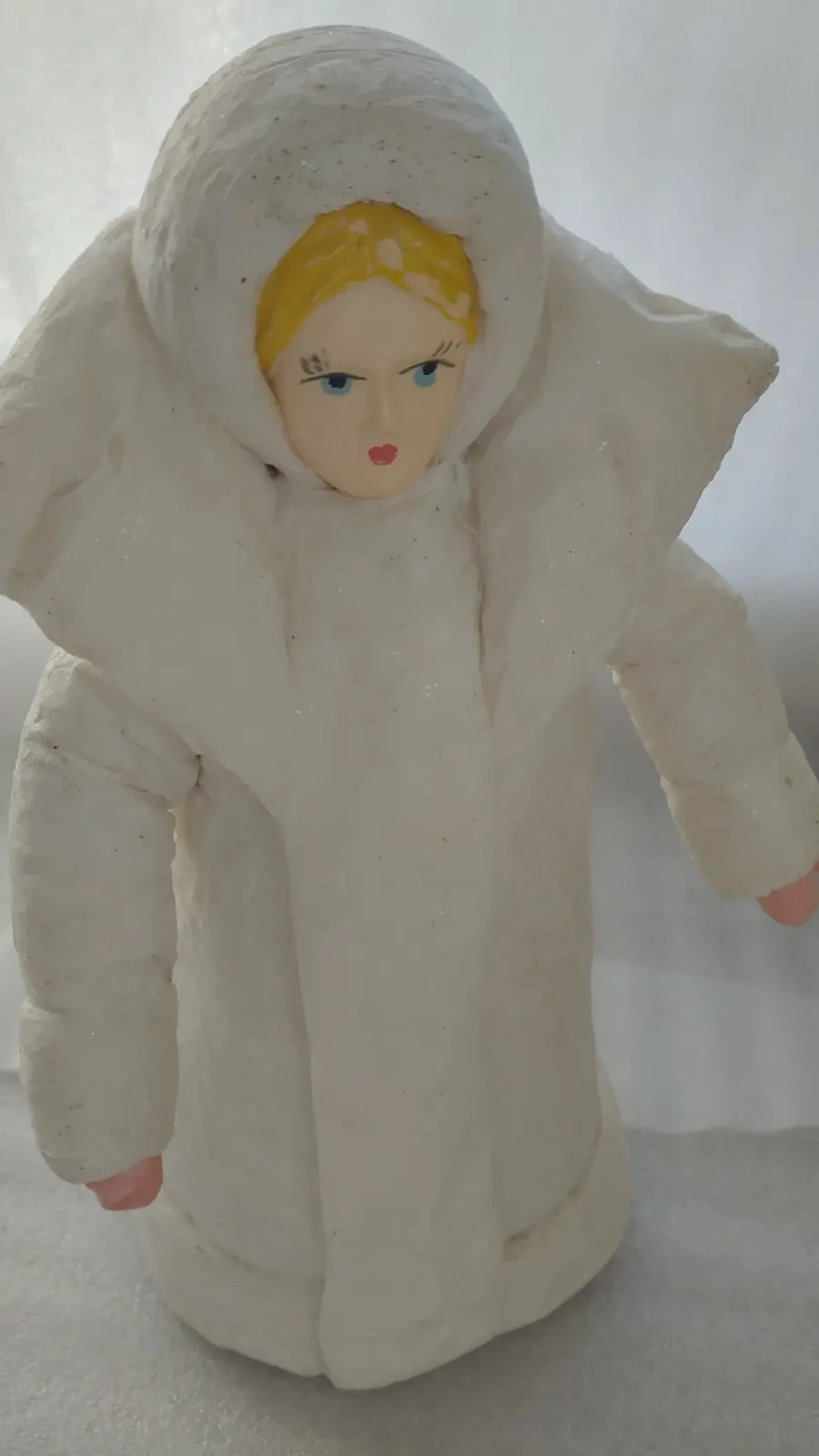
Antique Vintage Cotton Christmas Ornament Decor Figurine Snowmaiden
Documented example from our collection with surviving factory label.
View ornament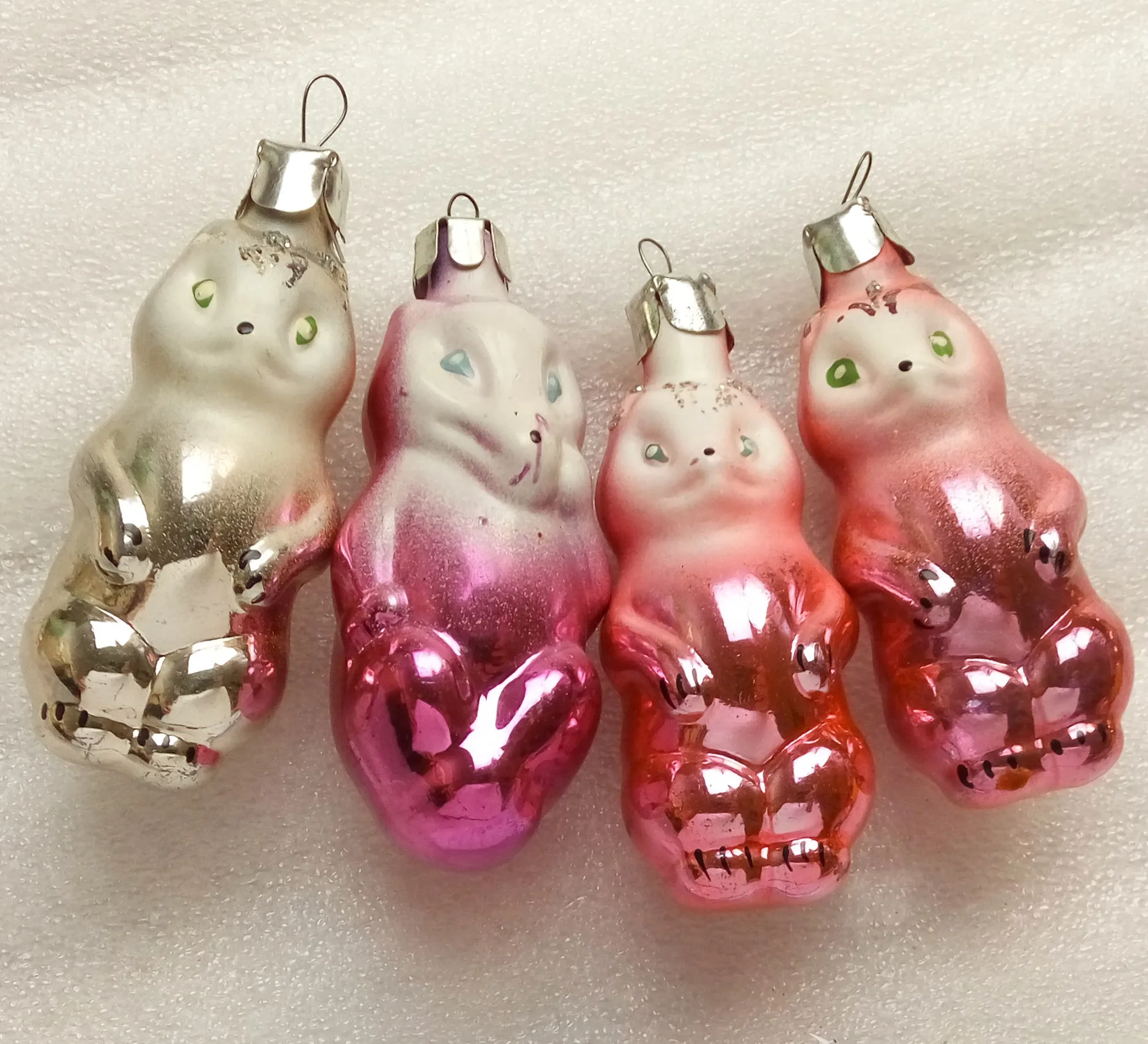
Set of 4 Vintage Glass USSR Christmas Ornaments Tree Animals
View ornament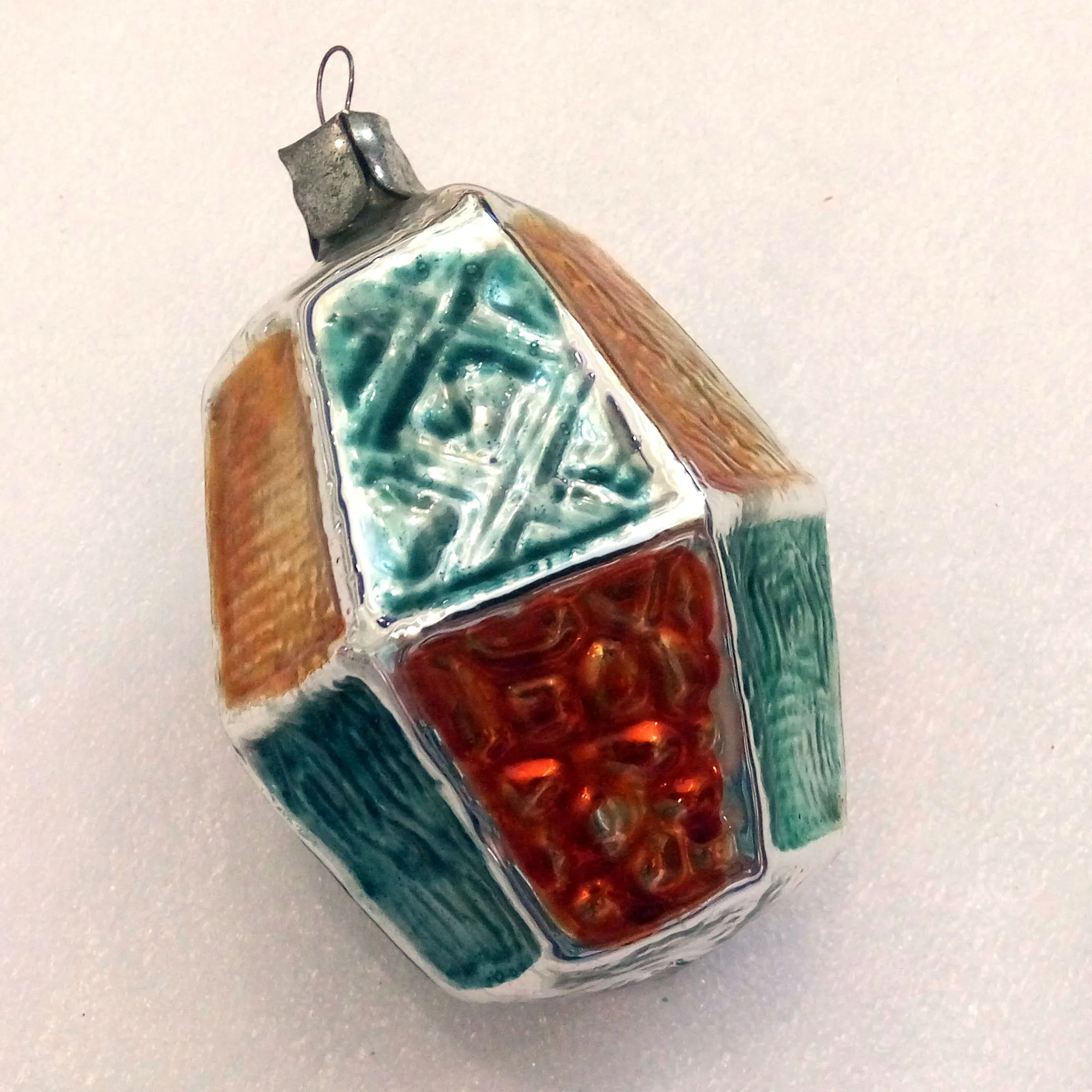
Antique Vintage Russian Glass Christmas Ornament Lantern
View ornament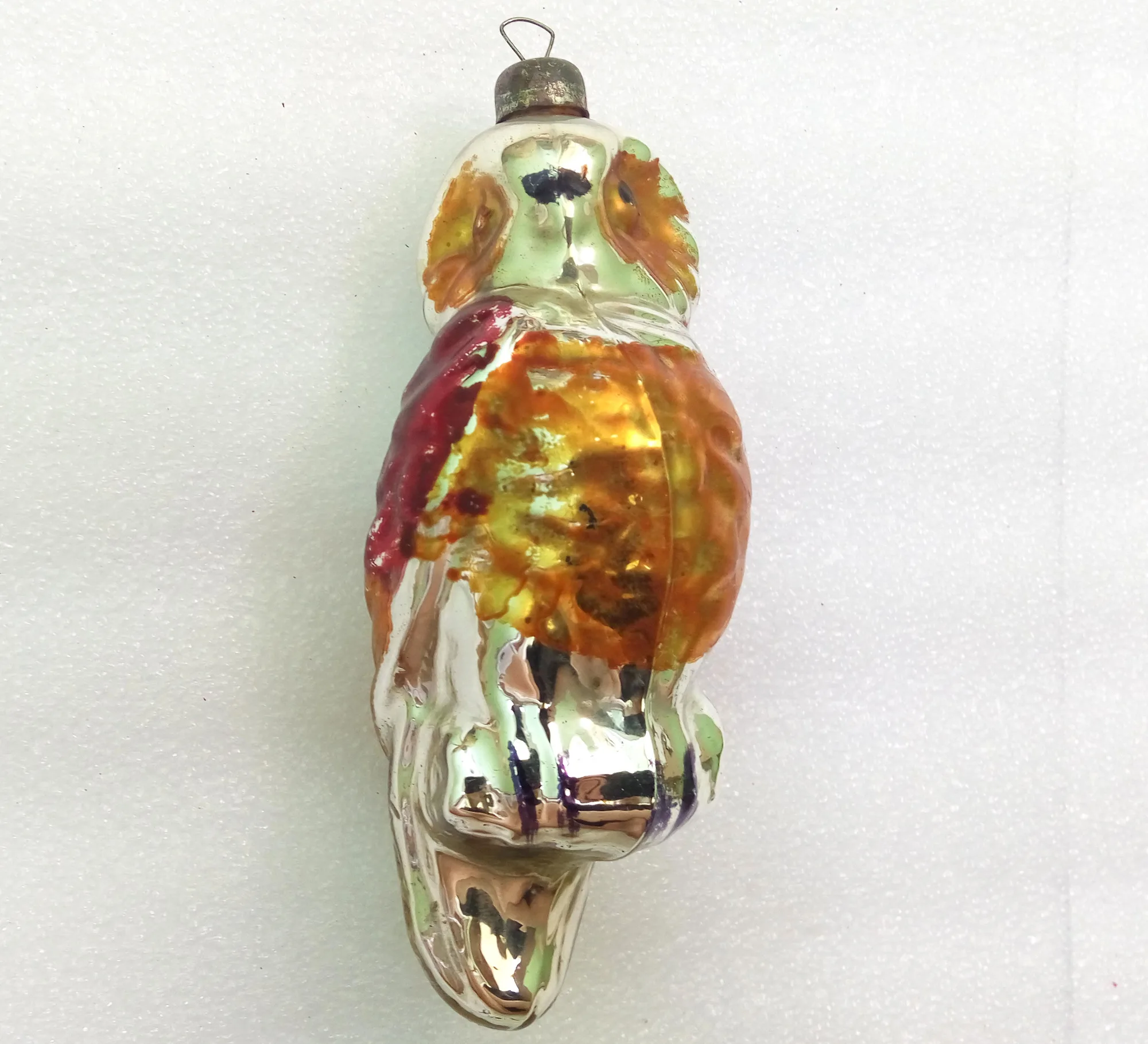
Vintage USSR Glass Christmas Tree Ornament Old Owl
View ornament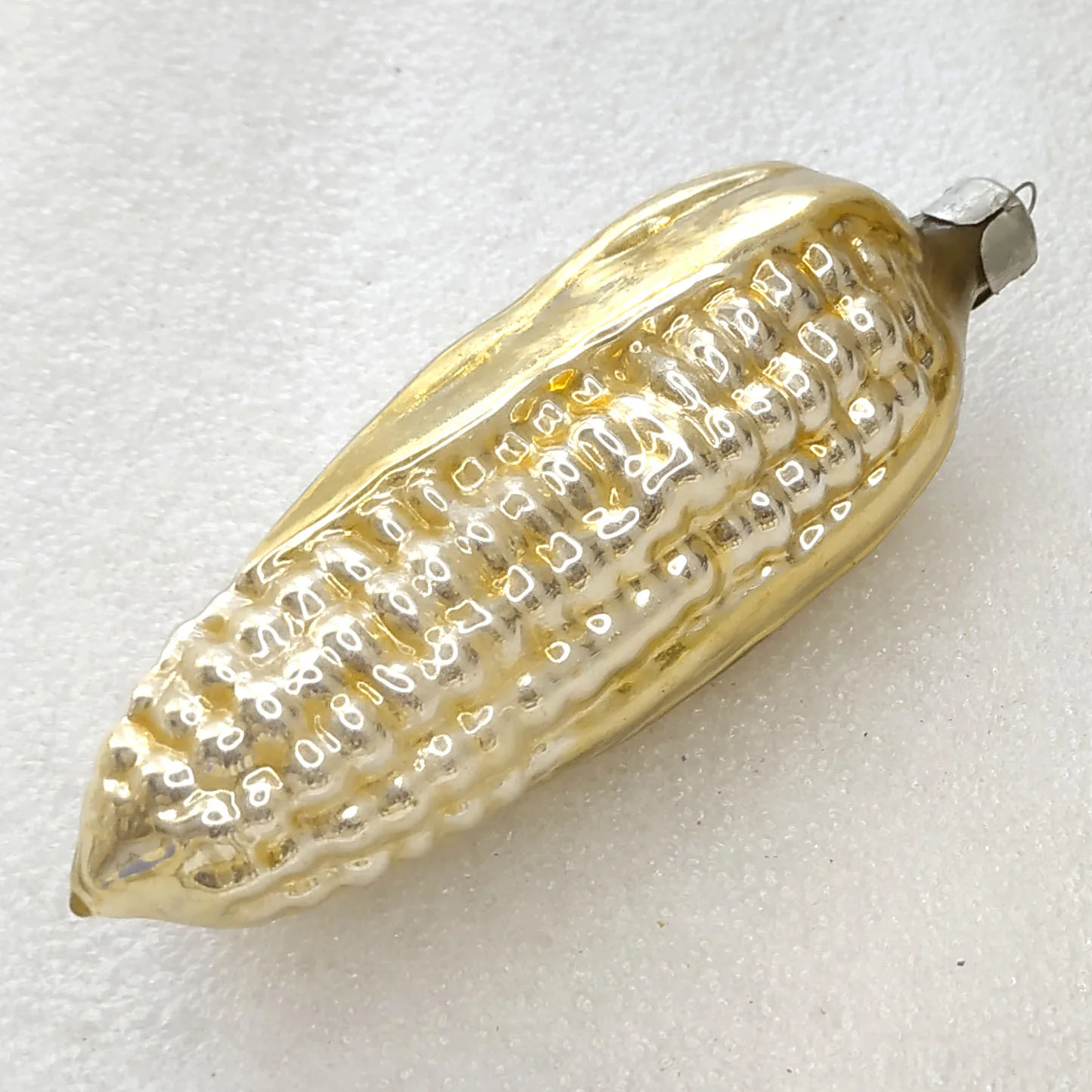
Antique Vintage Russian Glass Christmas Ornament Old Corn
View ornamentLviv — A Post-War Center of Glass Ornament Production
Lviv became another important center of Ukrainian glass Christmas ornament production after the Second World War.
Sources on Ukrainian ornament history identify Lviv among the early post-war producers and indicate that Christmas ornaments were being manufactured there by 1946.
The history of Lviv is especially interesting because Christmas ornaments became associated with the city’s broader glass and mirror industry.
This relationship between decorative ornaments and industrial glassmaking is similar in principle to what happened in Kostiantynivka: the skills and infrastructure required for other types of glass production could also support Christmas ornament manufacturing.
The glassblowing tradition survives in Lviv today. At the Lviv glass and mirror works, ornaments are still manually blown, silvered, painted and decorated.
For collectors, however, identifying specifically Soviet-period Lviv ornaments requires care. Similar shapes and painting techniques were used at multiple factories, and attribution should ideally be supported by original packaging, labels, catalogues or documented examples rather than appearance alone.
Kyiv — Artels, Workshops and the Peremoha Factory
Kyiv represents another important part of the story.
When the New Year tree returned to public life in the mid-1930s, demand for decorations increased much faster than industrial production could initially supply them.
Early decorations therefore came from a combination of workshops, artels and handmade production.
Cotton, cardboard, paper, foil and papier-mâché were particularly suitable for this environment because they did not require the specialized furnaces and glassblowing skills necessary for thin blown-glass ornaments.
In the post-war period, Kyiv developed larger-scale production. Among the enterprises associated with Ukrainian Christmas ornament history was the Peremoha (“Victory”) factory.
Kyiv is important precisely because its ornament history was not limited to glass. The city helps demonstrate the extraordinary variety of materials used for Soviet New Year decorations.
Odesa and Molded Decorations
Odesa also appears in histories of Ukrainian Soviet Christmas decoration production, particularly through the Odesa Model Factory.
Its inclusion is important because the history of Soviet holiday decorations extended far beyond thin blown glass.
Papier-mâché, cotton, cardboard and other molded or assembled materials were widely used for festive figures and decorations. Large Father Frost and Snow Maiden figures, masks and other New Year objects formed a related decorative industry alongside the smaller ornaments hung directly on trees.
More archival research is still needed to reconstruct the detailed production history and changing assortment of the Odesa enterprise, so individual ornaments should not be attributed to it solely on the basis of style or material.
More Than Glass Balls
One of the greatest misconceptions about Soviet Christmas ornaments is that the industry consisted mainly of silvered glass balls.
Glass was enormously important, but Soviet Ukrainian factories and workshops worked with a much wider range of materials.
Depending on the period and manufacturer, decorations could be made from:
- blown glass;
- molded glass;
- pressed cotton;
- papier-mâché;
- paper;
- embossed or pressed cardboard;
- foil;
- glass beads and tubes;
- wire and mixed materials;
- plastics and later synthetic materials.
Manufacturing methods also changed.
Early and post-war ornaments often involved considerable manual work. Glassblowers formed individual pieces, artists painted decorations by hand, and many figures required several separate assembly and finishing operations.
By the 1960s, manufacturers increasingly experimented with new forms and materials.
During the 1970s and 1980s, standardization and mass production became more prominent. Large quantities of balls, cones, icicles and other relatively standardized forms were produced, although hand decoration continued at many glass factories.
Synthetic materials also became increasingly common, including decorations made using materials such as Lavsan.
Ornaments as a Reflection of Their Time
Soviet Christmas ornaments are particularly fascinating because their subjects changed together with society.
Traditional themes never disappeared. Animals, birds, children, fairy-tale characters, fruits, vegetables, houses, bells and winter subjects remained popular.
But Soviet factories also transformed the New Year tree into a miniature reflection of contemporary life.
Different periods introduced subjects connected with:
- polar exploration;
- aviation;
- industry;
- agriculture;
- sport;
- Soviet fairy tales and children’s literature;
- technological progress;
- space exploration.
After the beginning of the Space Age, rockets, satellites, cosmonauts and other space-related ornaments became some of the most recognizable products associated with Soviet New Year design.
For collectors today, these changing themes can provide useful clues when estimating the period in which an ornament was produced — although subject matter alone is never sufficient for precise dating.
Why Identifying a Factory Is Difficult
Collectors often want to know exactly where a particular Soviet ornament was made.
Unfortunately, appearance alone is rarely enough.
Factories could manufacture similar shapes. Molds and designs changed over time. Enterprises were reorganized or merged. Some decorations were produced in enormous quantities, and original packaging was usually discarded decades ago.
A confident attribution should therefore rely whenever possible on several forms of evidence:
- original factory boxes;
- paper labels;
- printed factory names;
- surviving price labels or product information;
- documented factory catalogues;
- museum collections;
- archival photographs;
- ornaments with established provenance;
- comparison with reliably documented examples.
A shape that is commonly described online as “Lysychansk,” “Kostiantynivka” or “Klavdiievo” should not automatically be treated as proof of manufacture there.
This distinction becomes especially important as Soviet Christmas ornaments become increasingly collectible.
A Ukrainian Chapter of a Much Larger Story
Kostiantynivka, Lysychansk, Klavdiievo, Terebovlia, Lviv, Kyiv and Odesa represent only part of the history of Christmas ornament production in Soviet Ukraine.
Their stories nevertheless demonstrate the remarkable diversity of the industry.
One factory could grow from an artel. Another could develop from a workshop attached to a local industrial combine. A medical-glass operation could evolve into a major Christmas ornament manufacturer. A large glass enterprise could operate an ornament workshop alongside completely different products.
Together, these enterprises supplied generations of families with decorations that survived long after the factories, political system and industrial structures that created them had changed.
Today these ornaments are more than nostalgic holiday decorations. They are small historical objects that preserve evidence of glassmaking traditions, industrial design, hand craftsmanship, popular culture and everyday life in twentieth-century Ukraine.
As this guide develops, we will add documented examples from individual factories, original packaging and labels, manufacturing details and ornaments from our collection wherever their attribution can be established with reasonable confidence.